
'The nominal GDP growth assumption for FY25 may be revised upwards on higher growth expectations.'

A ramp-up in COVID-19 vaccination, healthy advance estimates of kharif (summer) crop and faster government spending were the factors which led to the revision, the agency said in a statement. It can be noted that after the 7.3 per cent contraction in 2020-21, there were expectations of a higher growth number in 2021-22.

Fitch Ratings on Wednesday raised India's GDP growth forecast to 6.9 per cent for current fiscal year, from 6.5 per cent earlier, citing strong June quarter growth and domestic consumption-led demand.

Global rating agency Moody's on Monday raised India's growth forecast for 2024 calendar year to 6.8 per cent, from 6.1 per cent estimated earlier, on the back of 'stronger-than-expected' economic data of 2023 and fading global economic headwinds. India's real GDP expanded 8.4 per cent year-over-year in the fourth quarter of calendar year 2023, resulting in a 7.7 per cent growth for full-year 2023. Capital spending by the government and strong manufacturing activity have meaningfully contributed to the robust growth outcomes in 2023, Moody's Investors Service said.

Reserve Bank on Wednesday cut India's growth forecast to 6.5 per cent from 6.7 per cent estimated earlier for the current financial year on account of impact of global trade and policy uncertainties. Prospects of agriculture sector remain bright on the back of healthy reservoir levels and robust crop production in 2025-26, RBI Governor Sanjay Malhotra said while unveiling the outcome of the first bi-monthly Monetary Policy Committee meeting for the current financial year.
India's economic growth forecast for 2025 has been revised downward to 6.3 per cent, and despite a projected moderation, the country remains one of the fastest-growing large economies, supported by resilient consumption and government spending, the United Nations has said.

The Reserve Bank of India on Wednesday retained the economic growth projection for the current financial year at 10.5 per cent, while cautioning that the recent surge in COVID-19 infections has created uncertainty over the economic growth recovery. In its last policy review, the RBI had projected a GDP growth rate of 10.5 pc for FY'22. Taking various factors into consideration, it said, "the projection of real GDP growth for 2021-22 is retained at 10.5 per cent consisting of 26.2 per cent in Q1, 8.3 per cent in Q2, 5.4 per cent in Q3 and 6.2 per cent in Q4."

Goldman Sachs has materially lowered its earnings growth forecast for Indian companies by a cumulative 9 percentage points over the next two years.

Calling for immediate policy action by the government, it warned that in the absence of such a step the GDP growth could slide even deeper -- to 4.3 per cent in 2012-13.

Asian Development Bank (ADB) has kept its outlook for India's economic growth unchanged at 7 per cent for the current fiscal year while forecasting a weaker-than-previously expected pace for developing Asia. ADB's 7 per cent growth projection for fiscal 2022-23 (April 2022 to March 2023), unchanged from its September forecast, compares to 8.7 per cent GDP growth in 2021-22. For 2023-24, the GDP growth has been kept unchanged at 7.2 per cent.

Global banking major, HSBC has retained its India GDP growth forecast of 6.2 per cent in FY10 but hiked the outlook for next fiscal by 0.5 per cent to 8.5 per cent given the economic recovery.

A prolonged supply shock can transmit to lower incomes, and dampen confidence and sentiment, warns Aditi Nayar, chief economist, head-research and outreach, ICRA.

Moody's Investors Service on Friday raised India's growth projection for 2023 calendar year to 6.7 per cent on account of robust economic momentum. "Strong services expansion and capital expenditures propelled India's 7.8 per cent real GDP growth in the second (April-June) quarter from a year ago. "We have accordingly raised our 2023 calendar year growth forecast for India from 5.5 per cent to 6.7 per cent," Moody's said in its Global Macro Outlook. - el nino
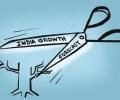
Global forecasting firm Oxford Economics on Monday revised downwards its India GDP growth forecast for 2021 to 10.2 per cent from 11.8 per cent previously, citing the country's escalating health burden, faltering vaccination rate and lack of a convincing government strategy to contain the pandemic. Oxford Economics also said that notwithstanding the likelihood of further mobility restrictions, it expects India's targeted lockdown approach, less stringent restrictions, and resilient consumer and business behaviour to mitigate the economic impact of the second wave.
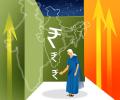
S&P Global Ratings on Tuesday retained India's growth forecast at 6.8 per cent for the current fiscal and said it expects the RBI to start cutting interest rates in its October monetary policy review. In the economic outlook of Asia Pacific, S&P Global Ratings also retained its GDP growth forecast for the 2025-26 fiscal at 6.9 per cent and said solid growth in India will allow the Reserve Bank to focus on bringing inflation in line with its target.

Stating that an economic recession gripped global economy following the lockdowns due to COVID-19 pandemic, Fitch Ratings on Friday said the initial disruptions to regional manufacturing supply chains in China have now broadened to include local discretionary spending and exports.

The Reserve Bank of India (RBI) maintained its key policy rates for the fourth consecutive time, keeping the repo rate at 5.25 per cent, while the benchmark BSE Sensex closed 152 points higher in a volatile session, recovering from an intraday dip.

Moody's on Thursday raised India's GDP forecast for the calendar year 2020 upwards to -8.9 per cent contraction from -9.6 per cent contraction forecast earlier. Similarly, India's GDP forecast for the calendar year 2021 has been revised upwards to 8.6 per cent from 8.1 per cent projected earlier. The report released by Moody's Investors Service attributed the reason behind better growth to the falling of coronavirus cases in the country.

Professional forecasters have revised their projections for GDP growth in the current fiscal to 8.5 per cent from the earlier estimate of 8.4 per cent, according to a Reserve Bank of India survey.

The World Bank on Tuesday revised upwards its GDP growth forecast for India to 6.9 per cent for 2022-23, from 6.5 per cent earlier.

The Reserve Bank of India (RBI) is widely expected to keep its benchmark repo rate unchanged in the August monetary policy review, with economists citing elevated inflation risks and the pending closure of the FCNR(B) deposit scheme as key factors. Most anticipate a 'Neutral' policy stance but with a hawkish tone due to geopolitical tensions, high crude oil prices, and an uneven monsoon.

Moody's Ratings on Thursday raised India's GDP growth forecast for FY24 to around 8 per cent from 6.6 per cent on the back of strong domestic consumption and capital expenditure. The estimate comes a day after RBI Governor Shaktikanta Das said the economic growth in the current financial year could be close to 8 per cent in view of the third quarter GDP data released by the government. The latest estimate of Moody's is about 140 basis points higher than the earlier projection of 6.6 per cent made in November 2023.

Wall Street brokerage Goldman Sachs has flagged a slew of concerns on the surging COVID-19 caseload that has been hitting new records everyday, coupled with the rising lockdowns, forcing it to downgrade India's GDP growth forecast for the full year to 10.5 per cent from 10.9 per cent, apart from pegging down stock indices valuation and earnings. In a detailed note on Tuesday, Goldman Sachs' house economists led by Sunil Koul said these record number of pandemic cases and a host of key states announcing stricter lockdowns of late have fuelled serious growth concerns, leaving investors worried about the risks to macro and earnings recovery.
The Reserve Bank on Wednesday marginally lowered the country's GDP growth projection for the current fiscal at 6.8 per cent from its earlier estimate of 7 per cent. However, despite the downward revision in the economic growth projection, India will remain among the fastest growing major economies in the world, said RBI Governor Shaktikanta Das while announcing the latest bi-monthly monetary policy.
Economic think-tank National Council for Applied Economic Research on Tuesday revised upwards the GDP growth forecast to 7.98 per cent in 2003-04 from its earlier projection of 7 per cent.

Moody's expected economic activity to pick up in 2020 and 2021 to 6.6 per cent and 6.7 per cent, respectively.

The upward revision in growth forecast for current fiscal comes in the backdrop of GDP expanding 8.2 per cent in April-June quarter, higher than Fitch's expectation of 7.7 per cent.

Global financial services firm Nomura has sharply lowered India's growth forecast for this fiscal to 5.8 per cent, way below the government's projection, saying the country's monetary and fiscal policies are at loggerheads.

The Asian Development Bank on Wednesday revised down India's economic growth forecast for the current fiscal to 10 per cent, from 11 per cent predicted earlier, citing the adverse impact of the second wave of the pandemic. The growth forecast for India in fiscal year 2021 (ending in March 2022) was revised down, as the spike in COVID-19 cases during May dented the recovery, the Asian Development Bank (ADB) said in its latest economic outlook. "The outbreak, however, dissipated faster than anticipated, resulting in several states easing lockdown measures and returning to more normal travel patterns.

Growth forecast has been lowered owing to tepid growth in the first half of 2017-18, the lingering effects of demonetisation, transitory challenges of GST, and some risks to agriculture stemming from a spotty monsoon.

India's services sector experienced its weakest growth in four-and-a-half years in July, as new business orders, both domestic and export, eased due to intense competition and declining demand. Despite a modest rebound in job creation and improved profit margins, overall business confidence slipped, reflecting a broader slowdown in the economy.
HSBC on Monday lowered India's GDP forecast for the current financial year to 4 per cent from 5.5 per cent earlier saying economic uncertainty is likely to weigh on the growth forecast in the coming months.
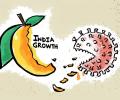
The Asian Development Bank has downgraded India's economic growth forecast for the current financial year to 10 per cent on Tuesday, from 11 per cent projected in April, on account of the adverse impact of the coronavirus pandemic. India's GDP growth recovered to 1.6 per cent in the last quarter of fiscal year ended March 2021, narrowing contraction in the whole fiscal year from 8 per cent estimated in April to a revised 7.3 per cent, the multilateral funding agency said in the Asian Development Outlook (ADO) Supplement. "Then a second wave of the pandemic induced many state governments to impose strict containment measures.

'Healthy double-digit returns are still possible, though a sharp rally is unlikely.'

S&P Global Ratings on Thursday cut India's growth forecast for the current fiscal to 9.5 per cent, from 11 per cent earlier, and warned of risk to the outlook from further waves of COVID pandemic. The agency lowered the growth outlook saying that a severe second COVID-19 outbreak in April and May led to lockdowns imposed by states and sharp contraction in economic activity. "We forecast growth of 9.5 per cent this fiscal year from our March forecast of 11 per cent," S&P said.

Moody's Investors Service on Tuesday lowered India's GDP growth forecast for the 2020 calendar year to 5.3 per cent, on coronavirus implications on the economy. Moody's had in February projected a 5.4 per cent real GDP growth for India in 2020. This too was a downgrade from 6.6 per cent earlier forecast.

According to Fitch rupee is expected to weaken to 72 to a dollar by the end of December 2019, and further to 73 by December 2020, from 69.82 to a dollar in end December 2018.

The Reserve Bank of India on Friday slashed the growth projection to 7 per cent for the current fiscal from the earlier forecast of 7.2 per cent, citing aggressive tightening of monetary policies globally and moderation in demand. Unveiling the fifth monetary policy for this fiscal, RBI Governor Shaktikanta Das said the central bank remains committed to price stability to put the country on the sustained path of growth.

The brokerage firm cautioned that there is a possibility of further downside risks to growth, especially in the near term as RBI's policy interest rate cuts in recent months has not been translated into reduction in bank lending rates.
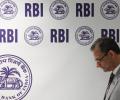
India Ratings and Research predicts the Reserve Bank of India (RBI) will maintain the repo rate at 5.25 per cent throughout FY27, despite potential inflationary pressures from higher fuel prices, with inflation expected to remain within the central bank's tolerance band.
